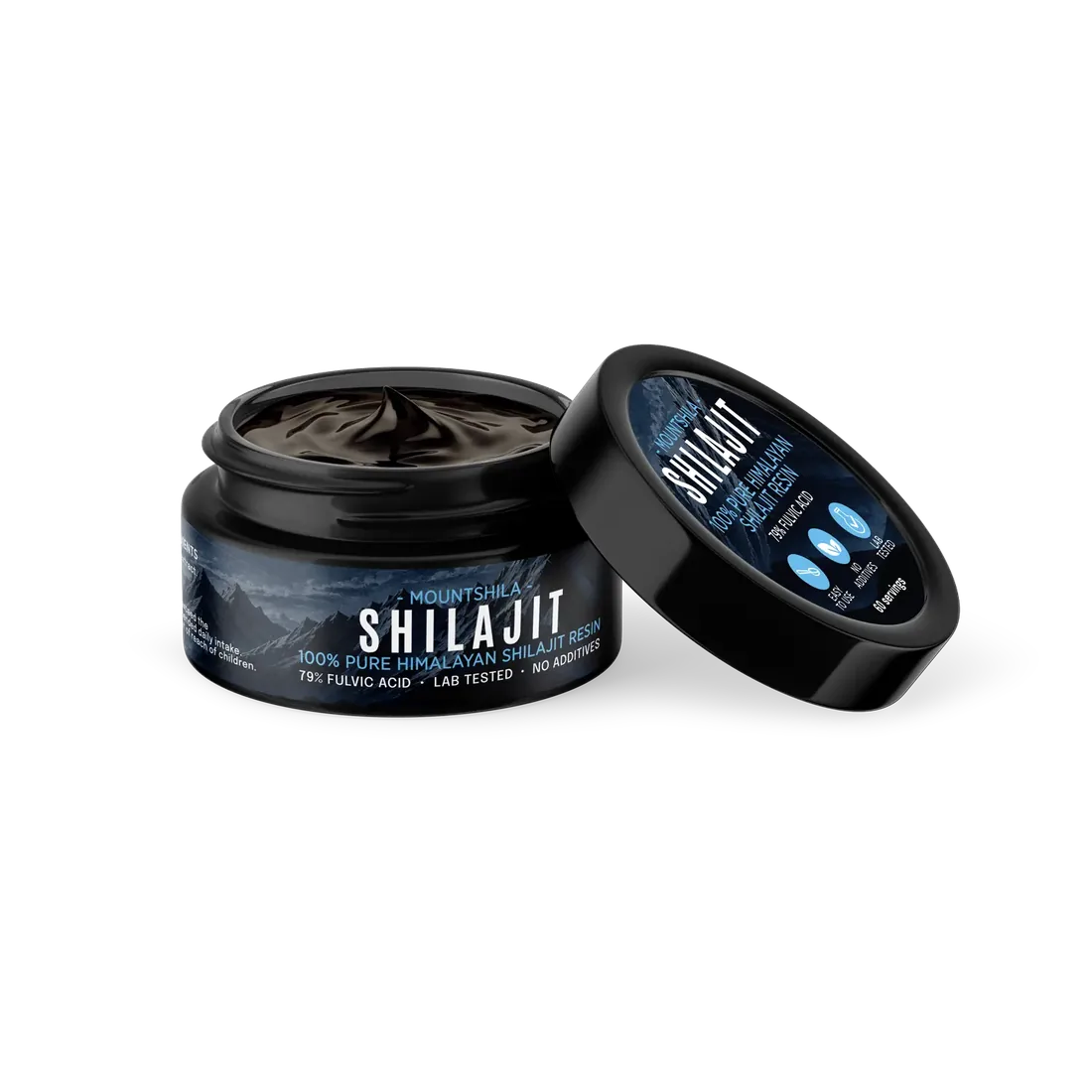


Shilajit and ashwagandha get grouped together constantly, both sold as "adaptogens" or general wellness supplements. They are chemically unrelated and studied for different outcomes. Here is how to actually decide between them, or whether you need both.
What each one actually is
Shilajit is a mineral-rich resin that exudes from Himalayan rock, dominated by fulvic acid and trace minerals - covered in depth on our fulvic acid page. Ashwagandha (Withania somnifera) is a root from a plant in the nightshade family, used in Ayurvedic medicine and studied mainly for its effect on stress-related outcomes. They come from different biological sources, have different active-compound profiles, and are not interchangeable despite both being marketed under the "adaptogen" umbrella.
Side-by-side comparison
| Shilajit | Ashwagandha | |
|---|---|---|
| Source | Mineral resin (rock exudate) | Plant root |
| Main active compounds | Fulvic acid, trace minerals | Withanolides |
| Best-studied outcome | Testosterone in men 45-55 (Preliminary, one trial) | Stress and cortisol markers (several human trials) |
| Typical serving | 500 mg twice daily | Varies by extract, commonly 300-600 mg daily |
| Traditional use | Ayurvedic rasayana (rejuvenative) | Ayurvedic adaptogen for stress and sleep |
Where the evidence actually points
Ashwagandha's human research base is broader than shilajit's, concentrated on stress, cortisol and sleep-quality outcomes across a number of trials using standardized extracts. Shilajit's human research base is smaller and concentrated elsewhere, mainly testosterone in a specific population (see our shilajit for men page) and general safety (see our page on whether shilajit is safe). These are genuinely different evidence bases pointing at genuinely different outcomes, not two versions of the same claim.
Can you take them together
We are not aware of research specifically testing shilajit and ashwagandha in combination, and we are not aware of a documented interaction risk between them either. If you are taking other medication or have a health condition, check with a doctor before combining any two supplements, per our general guidance on shilajit and medication.
The verdict
If your main goal is stress, sleep or cortisol-related, ashwagandha's evidence base is the stronger fit. If your interest is in shilajit's documented trace-mineral and fulvic-acid profile, or the testosterone research specific to shilajit, that is a different reason to choose it, not a competing claim on the same outcome. Neither replaces the other, because they were never really answering the same question.
Sources and further reading: