

"Is shilajit safe" is one question with two different answers depending on what you mean: safe from contamination, and safe to take given your own health situation. This page covers both, honestly, including who should not take it.
Safety from contamination: a testing question, not a shilajit question
Shilajit forms inside rock and is collected directly from it, which means raw, unpurified resin can carry naturally occurring heavy metals. This is the category's one documented real physical risk, and it is addressed through purification and independent laboratory testing, not through anything specific to a particular brand's formula. A resin tested by an accredited lab, with heavy metal results reported against EU food-supplement limits, has addressed this risk. A resin with no such certificate has not demonstrated that it has. See our full guide on shilajit and heavy metals for the detail.
General safety guidance
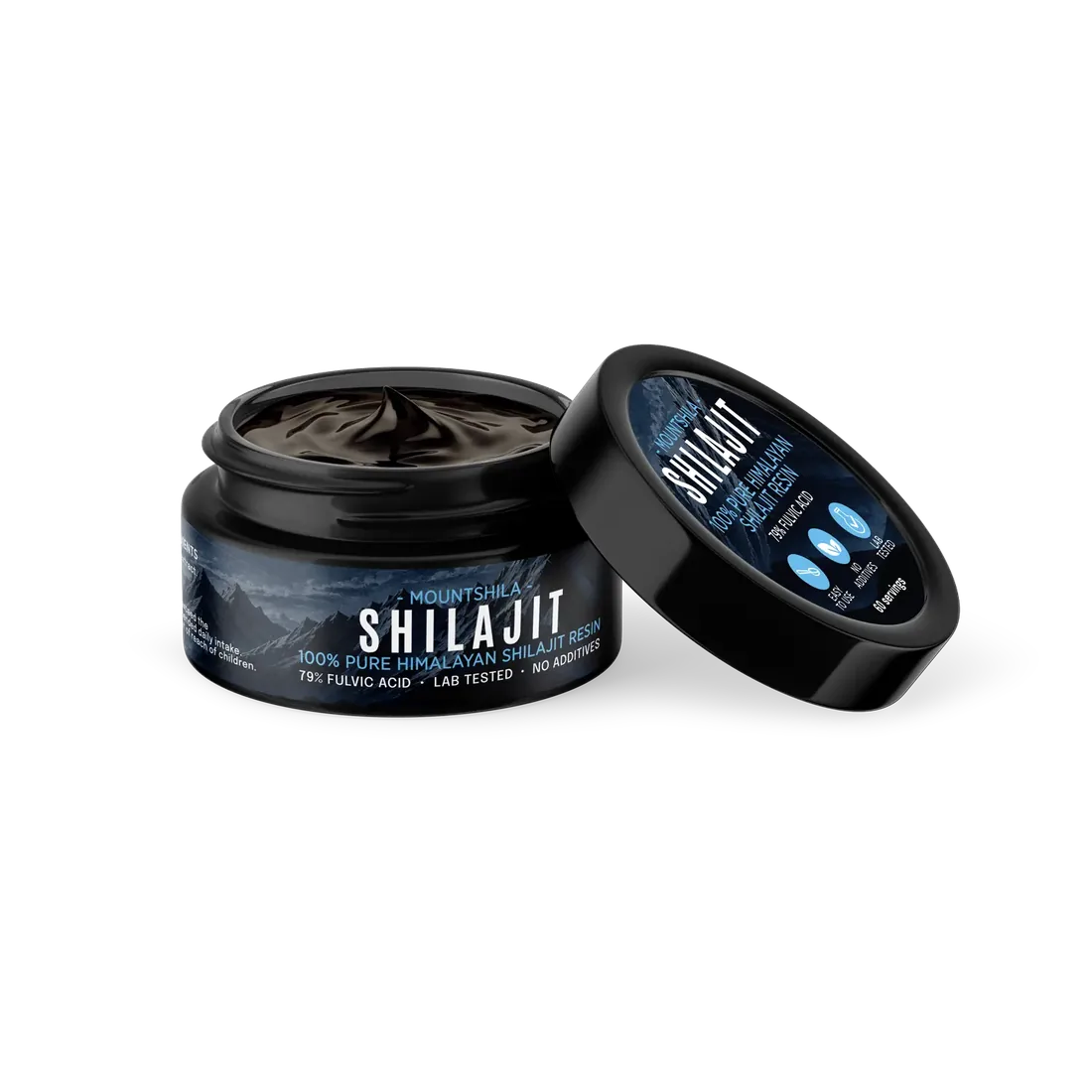
Beyond contamination, shilajit is sold and taken as a food supplement, not a medicine, and the general guidance that applies to any food supplement applies here: follow the recommended serving on the label, do not exceed the recommended daily intake, and keep it out of reach of children. A food supplement is not a substitute for a varied diet.
Who should not take it
If you are pregnant, nursing, or taking medication, ask your doctor before use. This is a straightforward, conservative recommendation, not a scare tactic: pregnancy, breastfeeding and many medications change how the body handles supplements generally, and there is not enough dedicated shilajit research in these specific groups to say more than "check with a doctor first."
What we do not know
Long-term safety data specific to shilajit, taken daily over years, is limited. This does not mean it is unsafe; it means the kind of large, long-duration human studies that would let anyone say so with confidence do not currently exist for this product category. We are not going to imply a certainty the evidence does not support in either direction. What we can say plainly: the resin itself, tested and purified to be free of contamination, taken at the recommended serving, is what we sell and what we stand behind. What taking it does beyond that is a separate, evidence-graded question, covered honestly on our What is shilajit page.
What we actually verify
We do not verify outcomes; no EU-authorised health claim exists for shilajit, so we make none. What we do verify, on every batch, through Eurofins Food Testing Netherlands: fulvic acid and humic acid content, and heavy metal and microbiology safety screens. That is the safety question we can answer with a laboratory result behind it.
Sources and further reading:
- European Commission, Regulation (EC) No 1881/2006 setting maximum levels for certain contaminants in foodstuffs
- See also: Shilajit and heavy metals: the real contamination risk
- See also: What is shilajit, actually