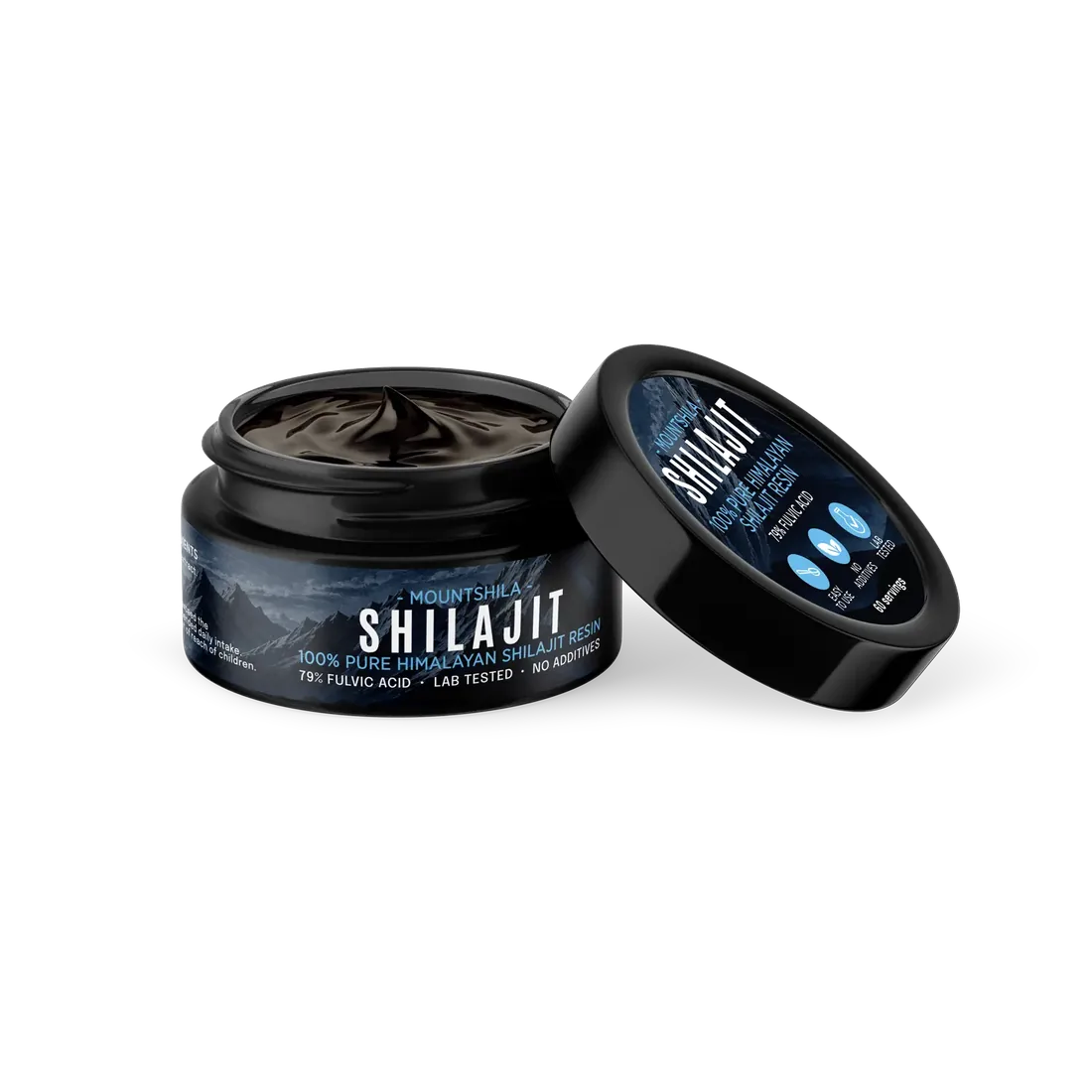


Of the concerns raised about shilajit, one is not a marketing exaggeration: heavy metal contamination. Unlike disputed benefit claims, this is a documented, physical risk with a specific cause and a specific, reliable test. This page explains where the risk comes from, how it is checked, and what a responsible brand does about it.
Where the risk actually comes from
Shilajit forms inside rock, in high-altitude mountain ranges, over centuries to millennia, as ancient plant matter is compressed and transformed. It is collected directly from that rock. Rock, by nature, can contain naturally occurring heavy metals, arsenic, cadmium, mercury and lead among them, and raw, unpurified shilajit can carry them through into the resin. This is not a defect introduced by a careless manufacturer; it is a property of where shilajit comes from. The real question is not whether the risk exists, it is whether a specific brand's resin has been purified and tested to keep it below safe limits.
How purification and testing address it
Purification filters and concentrates raw resin, and responsible processing is designed specifically to reduce heavy metal content along with other impurities. But processing alone is a claim, not proof. The only way to confirm a specific batch is actually within safe limits is a laboratory screen, using ICP-MS (inductively coupled plasma mass spectrometry), which can detect these metals at very low concentrations. A certificate of analysis that reports arsenic, cadmium, mercury and lead against EU food-supplement limits is the only reliable evidence that a given jar is safe on this specific point.
What to check before buying
- Heavy metal results actually present on the certificate, not just a fulvic acid percentage. A CoA that only reports potency is not a safety document.
- ICP-MS named as the method. This is the standard, sensitive method for this kind of screening.
- Results stated against EU food-supplement limits, not left as raw numbers with no reference point.
- A named, accredited laboratory, not an unnamed "partner lab."
Our own resin is tested by Eurofins Food Testing Netherlands, with arsenic, cadmium, mercury and lead all screened by ICP-MS and confirmed within EU food-supplement limits on our current batch. See the full result, and how to read any brand's certificate, on our certificate of analysis guide.
Why this matters more than the fulvic acid number
Marketing copy across this category leans heavily on fulvic acid percentages, because a bigger number is an easy thing to advertise. Heavy metal safety gets far less attention, because a clean result is less exciting to put on a label, and a brand that has not tested for it has nothing to say either way. This is, in our view, backwards. A resin can have an impressive fulvic acid percentage and still carry contamination above safe limits if it was never purified or tested properly. Potency without a safety screen is an incomplete picture, not a selling point.
Sources and further reading:
- European Commission, Regulation (EC) No 1881/2006 setting maximum levels for certain contaminants in foodstuffs
- See also: Understanding a shilajit certificate of analysis
- See also: How to tell real shilajit from fake