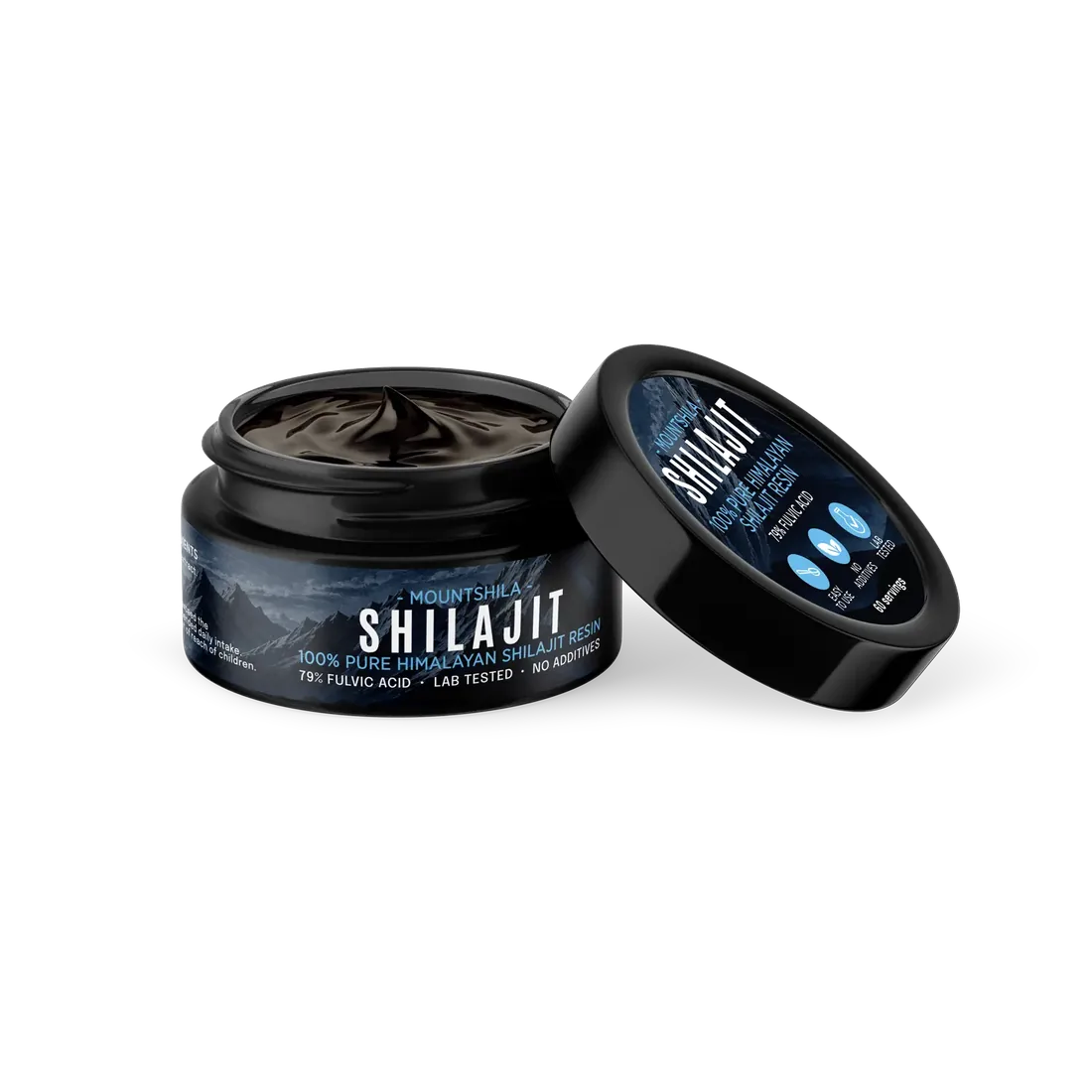


Search "how to tell real shilajit from fake" and you will find a long list of home tests: drop it in water and watch how it dissolves, hold a flame to it and watch how it burns, roll it between your fingers and check the texture. None of these tests can actually tell you what is in the jar. This page explains why, and what can.
Why the popular home tests do not work
The dissolve test, the burn test and the texture test are repeated across shilajit marketing content so often that they read as established fact. They are not. Purified resin, diluted resin, and resin cut with plant gums or tar-like fillers can all behave similarly in a glass of water or over a flame, because the tests are checking for texture and solubility, not chemical composition. A convincing fake does not need to fool a lab. It only needs to fool a water glass. None of these home tests can detect heavy metal contamination, confirm a fulvic acid percentage, or distinguish real humic substances from a plant-gum or mineral-tar substitute formulated to behave the same way.
What actually distinguishes real shilajit
Two humic substances define genuine shilajit: fulvic acid and humic acid, present together in specific, testable ranges. Both can only be confirmed by laboratory assay, gravimetry for fulvic acid, titrimetry for humic acid, not by appearance, smell or how the resin behaves in your hand. A resin without a laboratory test behind those two numbers is not verified as genuine, regardless of how it looks or dissolves. See our page on how we test every batch for the full four-test standard we hold our own resin to.
Contamination is the real risk, not "fakeness"
The more useful question is usually not "is this real shilajit" but "is this resin safe." Raw shilajit comes directly out of high-altitude rock. Unpurified or badly purified resin can carry heavy metals, arsenic, cadmium, mercury and lead, at levels that matter, regardless of whether the resin is otherwise genuine. This is the one documented, real safety risk in this category, and it is invisible to every home test. It only shows up on an ICP-MS heavy-metal screen, run by an accredited lab.
What to actually check before buying
- A named, accredited laboratory behind the certificate of analysis, not an anonymous "partner lab."
- The method next to each number. "79% fulvic acid" only means something with gravimetry named beside it.
- Heavy metal results against EU food-supplement limits, not just a potency figure.
- A recent, batch-specific sample date, not a certificate from years ago being reused indefinitely.
For the full walkthrough of how to read any brand's certificate, including our own as a worked example, see Quality decides everything and our guide to understanding a certificate of analysis.
What this means for you
There is no reliable test you can run at home. The only real verification is a laboratory certificate, from a named lab, with the method stated, covering both potency and safety. If a brand cannot show you one, there is no way to know what you are actually buying, no matter how it dissolves in water.
Sources and further reading:
- European Commission, Regulation (EC) No 1881/2006 setting maximum levels for certain contaminants in foodstuffs
- See also: Understanding a shilajit certificate of analysis
- See also: How we test every batch