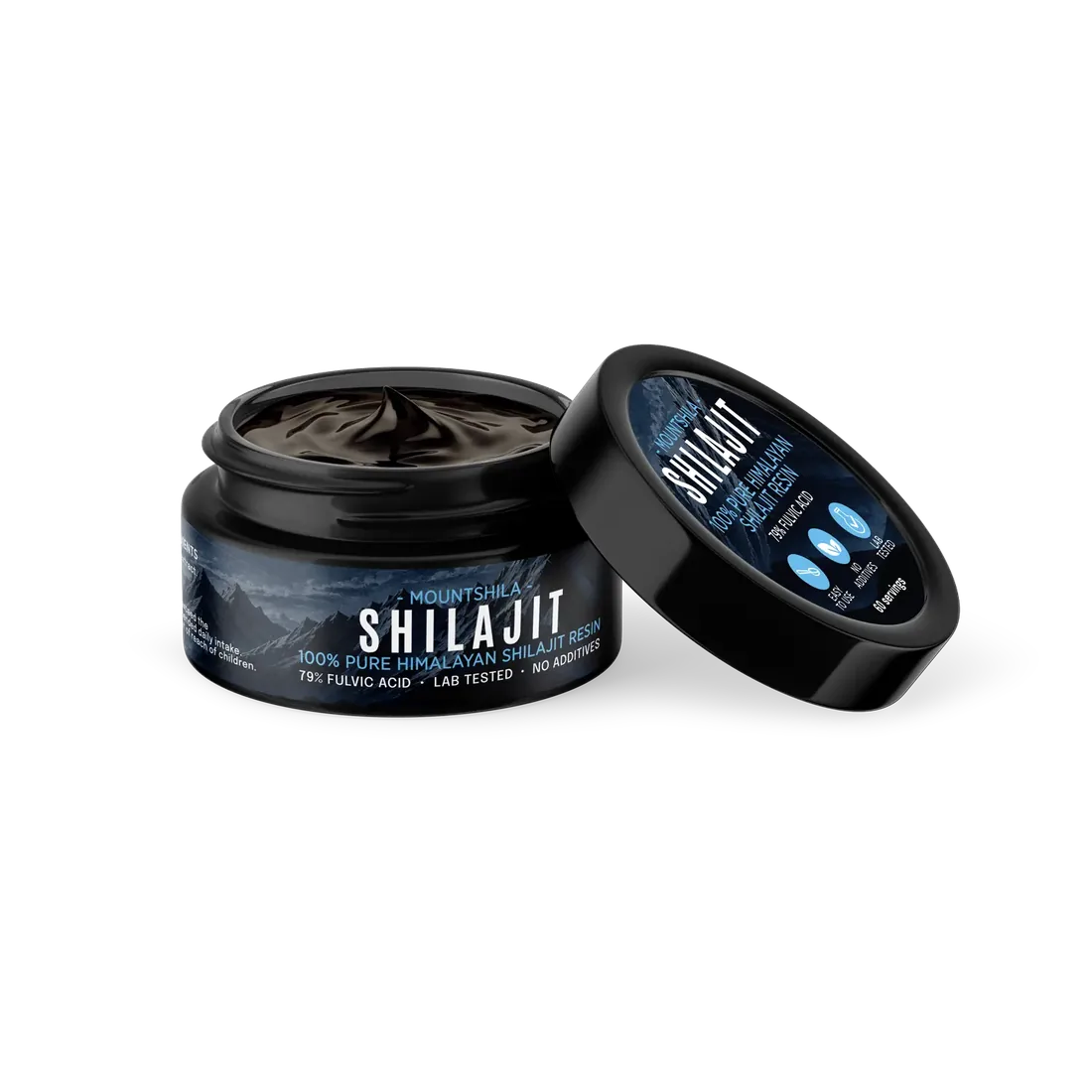


If a shilajit brand cannot show you a certificate of analysis from a named, independent laboratory, there is no way to know what is actually in the jar. Not the fulvic acid percentage on the label, not whether the resin is free of heavy metals, not whether it is genuine shilajit at all. This page explains what a certificate of analysis actually is, what it should contain, how to read one from any brand, and shows MountShila's own result as a worked example.
What a certificate of analysis is
A certificate of analysis, usually shortened to CoA, is a report from a laboratory stating what it found when it tested a specific sample. For a food supplement like shilajit resin, a proper CoA covers two different things that are easy to blur together: potency (how much of the substances that define genuine shilajit are actually present) and safety (whether the resin is free of contaminants at levels that matter). A brand quoting "79% fulvic acid" in marketing copy is making a claim. A CoA is the laboratory result the claim is supposed to be based on.
The four things a shilajit CoA should test
| Test | Method | What it tells you |
|---|---|---|
| Fulvic acid | Gravimetry | The most quoted, and most inflated, number in this category. Gravimetry measures the actual mass of fulvic acid recovered from a sample. |
| Humic acid | Titrimetry | The second humic substance that defines genuine shilajit. Fulvic acid and humic acid together are what fingerprint a real, undiluted resin rather than a diluted or synthetic imitation. |
| Heavy metals (arsenic, cadmium, mercury, lead) | ICP-MS | The category's one documented real safety risk. Raw shilajit comes out of rock; unpurified or badly purified resin can carry these metals above safe limits. |
| Microbiology (yeast and mould) | Plate count | Whether the resin meets ordinary EU food-supplement hygiene standards, the same standard as any other food product sold in the EU. |
A CoA that only reports a fulvic acid percentage and nothing else is not a complete safety picture. It tells you the resin is potent. It tells you nothing about whether it is safe to eat.
How to read any brand's certificate
Four checks apply to any CoA, from any brand, for any product:
- Who issued it. A named, accredited laboratory, not an anonymous "partner lab" or a certificate with no letterhead. If you cannot find the lab's name, treat the number as unverified.
- What it covers, and when. The sample description should be specific (which batch, which product) and reasonably recent. A CoA from three years ago tells you nothing about the jar in front of you today.
- The method behind each number. "85% fulvic acid" means nothing without the assay named next to it. Different methods can give different results for the same sample, so the number alone is not comparable across brands unless the method is too.
- The safety rows. Heavy metals and microbiology with actual figures against actual limits, not just the flattering potency line up top.
MountShila's certificate of analysis, as a worked example
Our resin is tested by Eurofins Food Testing Netherlands, an independently accredited laboratory. Reading our own result against the four checks above:
| Result | Method | Figure |
|---|---|---|
| Fulvic acid | Gravimetry | ~79% |
| Humic acid | Titrimetry | 4.6 g/100 g |
| Arsenic, cadmium, mercury, lead | ICP-MS | Within EU food-supplement limits |
| Yeast and mould | Plate count | <10 CFU/g |
We do not publish the full certificate document on this page, since it names a specific batch and sample date that will change as new lots are tested; the figures above reflect our currently available test. If you would like more detail on a specific result, contact us and we can point you to what is currently on file.
What this page is not saying
A strong CoA tells you a resin is what it claims to be, and that it is not contaminated above safe limits. It does not tell you what shilajit does in the body; no EU-authorised health claim currently exists for shilajit, so we do not make one. Testing supports the story about what is in the jar. It does not replace the separate, much thinner evidence base for what taking it actually does, which we grade honestly, topic by topic, on our What is shilajit page.
Sources and further reading:
- European Commission, Regulation (EC) No 1881/2006 setting maximum levels for certain contaminants in foodstuffs (heavy metals in food supplements)
- MountShila Certificate of Analysis, Eurofins Food Testing Netherlands (current batch on file)
- See also: How we test every batch