

Quality · From rock to jar
Quality decides everything.
With shilajit, the label tells you almost nothing. What matters is what happened between the rock and the jar: how it was purified, what was added, and whether anyone independent checked. This page shows our answer to each of those questions.
Why this page exists
Shilajit is a trust-poor category
Three problems are documented in this market. None of them are visible on a product photo.
Raw shilajit comes out of rock. Unpurified or badly purified product can carry lead, arsenic and other heavy metals. This is the category's one real, documented safety risk.
Resin cut with fillers, or powders and capsules where the actual shilajit content is a fraction of the headline weight. Cheap per jar, expensive per genuine gram.
Fulvic acid percentages quoted without the test method. Different assays give wildly different numbers for the same resin, and sellers pick the flattering one.
Our process
Five steps, nothing hidden

Who tests it
Eurofins: not our lab, and that is the point
Testing is only worth something when the tester has nothing to gain from the result. Eurofins is one of the world's largest accredited food-testing laboratory groups; we send them samples, they send us numbers. We do not run our own in-house assay and call it verification.
Each certificate of analysis names the laboratory, the method used for every result, and the sample it applies to. Resin that fails a safety screen is not sold. There is no "blend it down" step.
What we test
The four tests
The most quoted and most inflated number in this category. We measure it by gravimetry and declare the exact percentage on the laboratory report, with the method named next to it.
The second humic substance that defines genuine shilajit, measured by titrimetry in g/100 g. Together with fulvic acid it fingerprints a real, undiluted resin.
The category's documented real risk. ICP-MS screening for arsenic, cadmium, mercury and lead against EU food-supplement limits. This is why raw, untested shilajit should not be eaten.
Yeast and mould plate counts against CFU/g limits. A natural resin handled at altitude must still meet the same hygiene standards as any EU food product.
Reading the certificate
How to read a certificate of analysis
A CoA is only as good as your ability to read it. Whatever brand you buy, including ours, check these four things:

From a customer
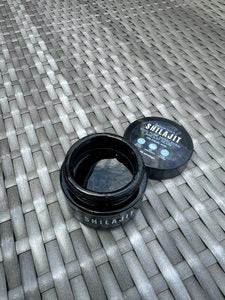
“Opened my first jar of the pure one and it's exactly what I expected. Proper sticky resin, just how it's supposed to look. Earthy and pretty strong on its own, but I mostly mix it so that suits me fine.”
Compare before you buy
Ask any brand these four questions
Go deeper
Related reading
The full guide to reading a CoA from any brand, with our own result as a worked example.
Read the guide →Why the popular home tests do not work, and what actually verifies authenticity.
Read the guide →Where the contamination risk actually comes from, and how ICP-MS testing addresses it.
Read the guide →Why unpurified "raw" shilajit is a real safety concern, not a purity bonus.
Read the guide →Our commitment
Testing supports the story. It never replaces it.
Shilajit earns attention on its own: a rare resin, a long tradition, one ingredient. Testing is how we make sure the jar lives up to that. We will keep sending our resin to an independent laboratory and standing behind what comes back.