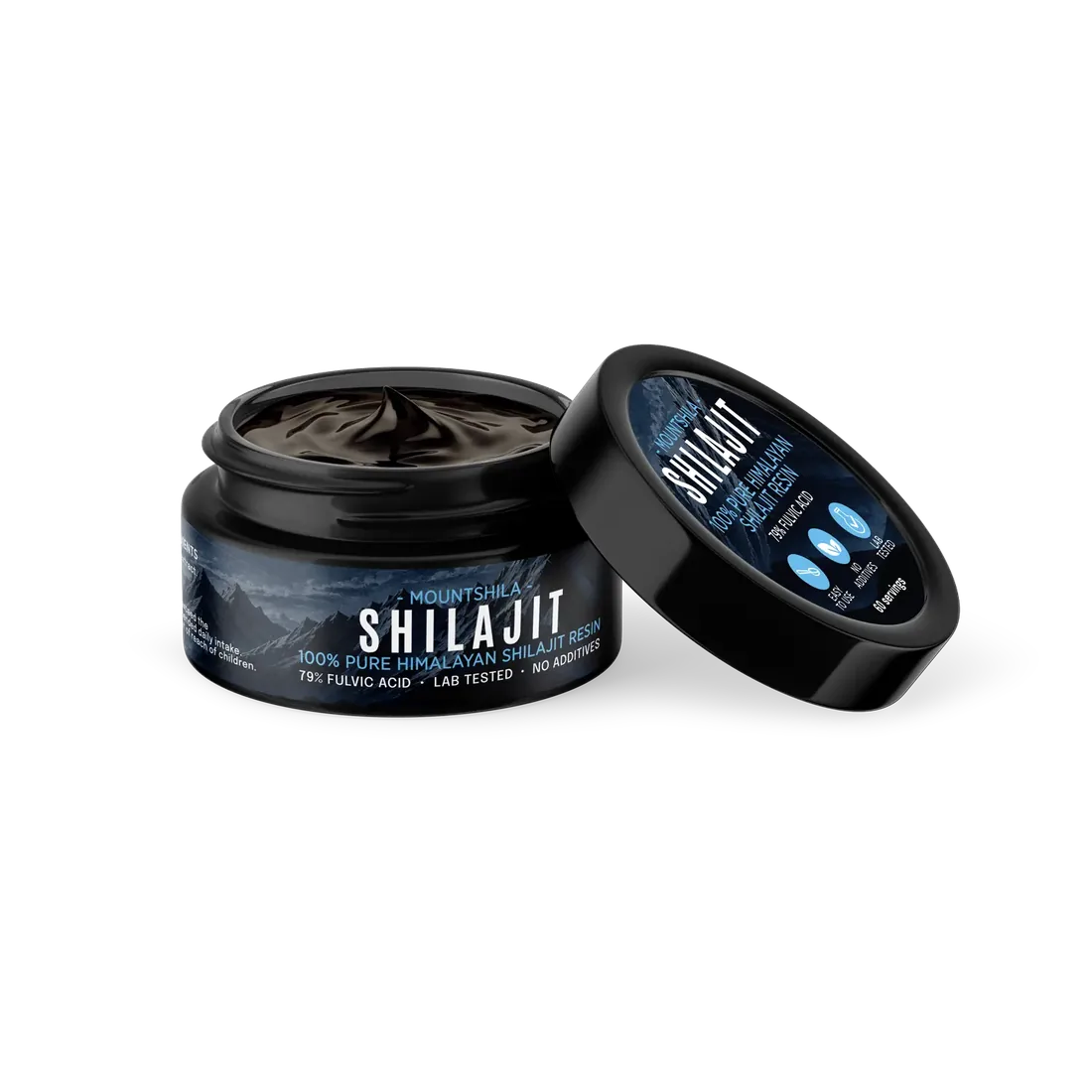


Shilajit and creatine sometimes appear on the same "best supplements for men" lists, which makes them sound interchangeable. They are not. Creatine is one of the most rigorously studied supplements in sports nutrition; shilajit is not, and the two do fundamentally different jobs.
What each one actually is
Creatine monohydrate is a compound the body already produces and stores mainly in muscle, where it helps regenerate ATP, the cell's immediate energy currency, during short bursts of high-intensity effort. Shilajit is a mineral resin dominated by fulvic acid and trace minerals, covered on our fulvic acid page, with a much smaller and different human research base. They are not competing for the same job.
Side-by-side comparison
| Shilajit | Creatine | |
|---|---|---|
| Source | Mineral resin (rock exudate) | Amino-acid-derived compound, made naturally and available as a supplement |
| Primary mechanism | Not fully established; fulvic acid and trace minerals | ATP-phosphocreatine energy system, well characterized |
| Best-studied outcome | Testosterone in men 45-55 (Preliminary, one trial) | Strength, power output, muscle mass (extensive, consistent human trial evidence) |
| Typical serving | 500 mg twice daily | 3-5 g daily (maintenance) |
| Evidence maturity | Early-stage, small trials | One of the most studied supplements in sports nutrition |
Why the comparison is a bit of a mismatch
Creatine's evidence base for strength and power performance is broad, consistent and built over decades of research, which is a genuinely different category from where shilajit's research currently stands. We are not going to pretend the two are evenly matched to make shilajit sound more proven than it is. If direct, well-established performance benefit is what you want, creatine's evidence supports that claim far more directly than shilajit's does. See our honest look at shilajit and exercise on the shilajit for athletes page.
Can you take them together
We are not aware of a documented interaction between shilajit and creatine, and they are commonly used for different reasons rather than as substitutes for one another. As with any combination, check with a doctor first if you take medication or have a health condition, per our page on shilajit and medication.
The verdict
If you want a supplement with strong, repeated evidence for strength and power output, that is creatine, not shilajit. If your interest in shilajit is its trace-mineral and fulvic-acid profile or the smaller testosterone research base, that is a separate, honestly weaker-evidenced reason to use it, not a rival claim to creatine's. We would rather be clear about that gap than blur it to make a comparison feel more even than it is.
Sources and further reading: