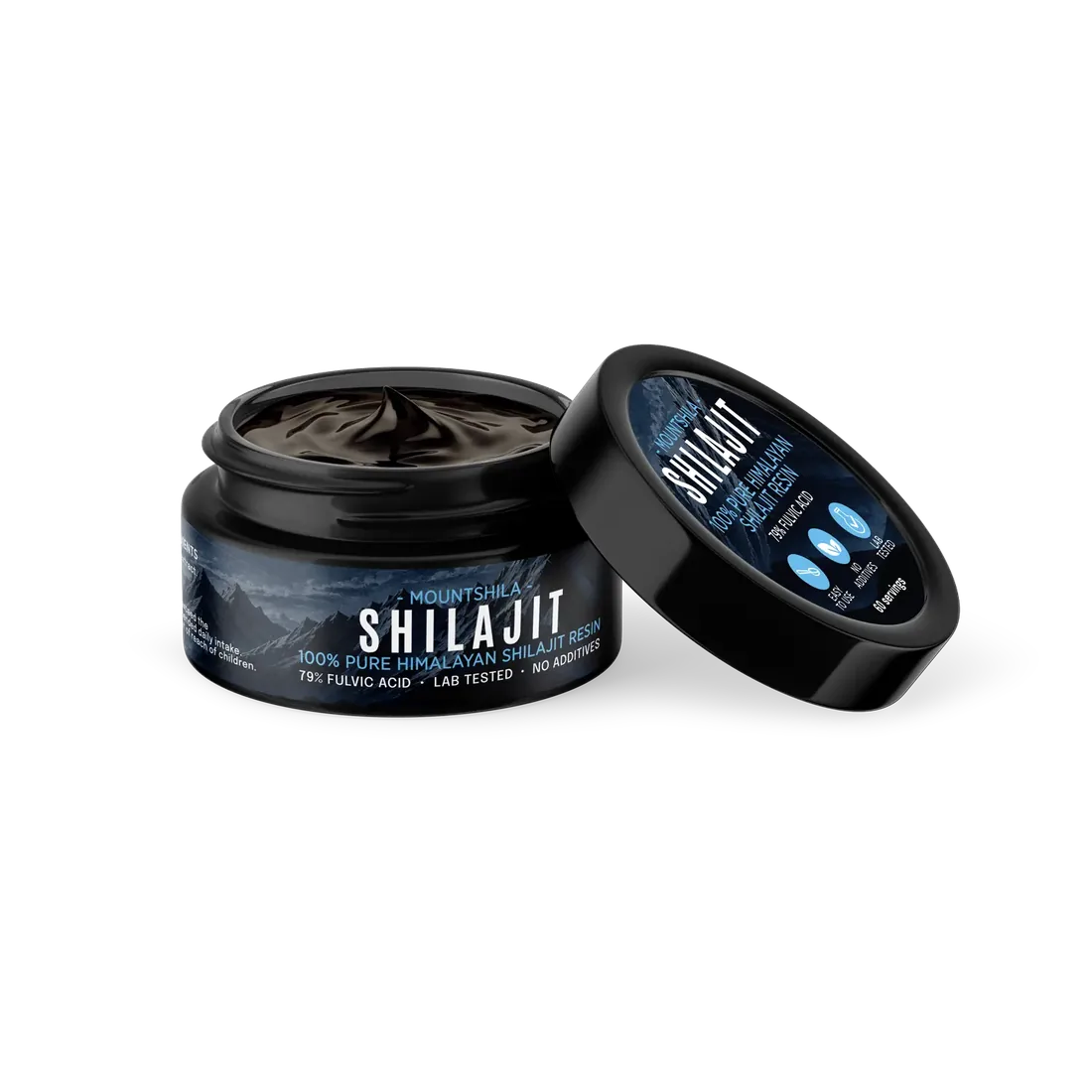


"Humic acid" and "fulvic acid" get used almost interchangeably in supplement marketing, sometimes even as if shilajit itself were simply "fulvic acid." They are related but distinct, and the difference actually matters for what you are buying.
Both come from the same source material
Humic substances form as organic matter, mostly plant material, breaks down over very long timescales under specific geological conditions. This decomposition process produces a mixture of related compounds, broadly split into three groups by molecular size and solubility: humin (the largest, least soluble fraction), humic acid (mid-sized, soluble in alkaline but not acidic conditions), and fulvic acid (the smallest molecules, soluble across the full pH range). Shilajit resin contains a mixture of these humic substances alongside trace minerals and other compounds, not fulvic acid alone.
Why fulvic acid gets singled out
Fulvic acid's smaller molecular size is the practical reason it gets more attention than humic acid in shilajit marketing: it is more soluble, and the fraction most commonly measured and quoted as a potency percentage on lab reports, including our own (see our Certificate of Analysis guide). That does not mean humic acid is irrelevant or absent from the resin, only that fulvic acid is the fraction that is easiest to quantify and standardize against.
Is shilajit "the same as" fulvic acid
No. Shilajit is the whole resin: a natural mixture of humic substances (including both humic and fulvic acid), trace minerals, and other organic compounds. A "fulvic acid supplement" sold on its own, often extracted from sources other than shilajit such as compost or peat, is a narrower, single-fraction product. Treating "shilajit" and "fulvic acid supplement" as interchangeable products is a common but inaccurate simplification.
What the research actually covers
Most of the human research relevant to shilajit, including the testosterone trial we cite on our shilajit for men page, was conducted on purified shilajit resin as a whole, not on isolated fulvic acid or humic acid in isolation. We are not aware of research separating out which specific fraction drives which specific outcome. Claims that attribute a benefit specifically to "the fulvic acid" rather than to shilajit as tested are going beyond what the underlying research actually isolated.
A useful marker, not the whole story
Fulvic acid content is a genuinely useful, measurable potency marker, which is why we report it on our lab results. It is not, on its own, the same thing as shilajit, and it is not proven to be the single active ingredient responsible for every claimed effect. See our full explanation of what fulvic acid actually is on our fulvic acid page.
Sources and further reading: