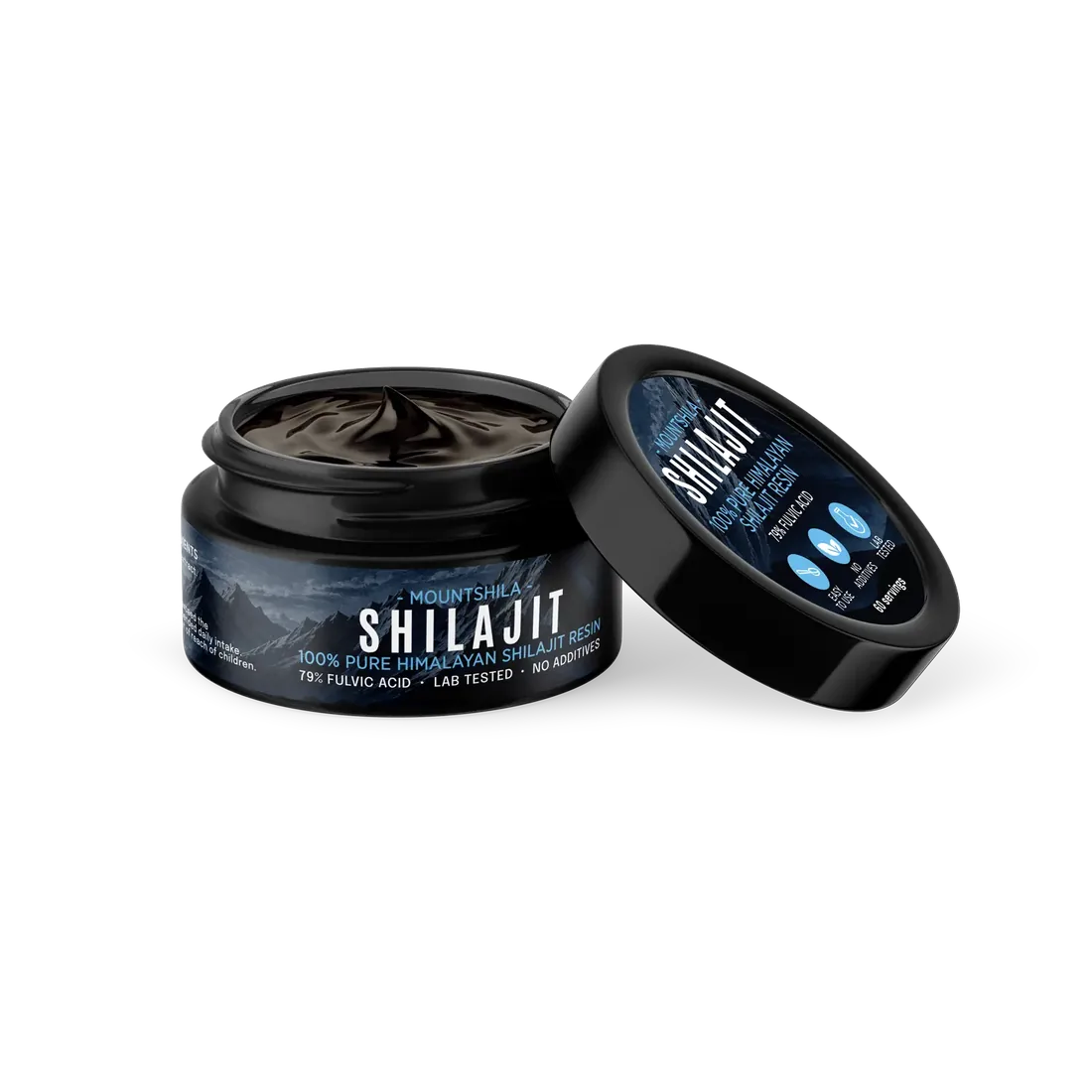


"Shilajit for women" searches usually come down to a handful of specific questions: can women take it at all, does it help with menopause, does it affect hormones or fertility. This page answers each one honestly, including where we simply do not have shilajit-specific research to point to.
Can women take shilajit?
Yes, as a food supplement, with the same general guidance that applies to anyone: follow the recommended serving, 500 mg twice daily, and do not exceed the recommended daily intake. The one specific caveat is pregnancy and breastfeeding, covered below. Beyond that, nothing about our product or its recommended use is men-only; the "for men" and "for women" framing in search results mostly reflects which specific claims have been studied in which group, not a difference in who can safely take the resin itself.
Menopause
Menopause symptoms
UnknownDirect answer: we are not aware of adequate human trials testing shilajit specifically for menopause or menopausal symptoms.
The published human research on shilajit that we are aware of has focused on other outcomes, in other groups, most notably a small trial on testosterone in men aged 45 to 55. We have not found a comparable study in women or specific to menopause, and we are not going to imply one exists.
Hormones
Hormone levels in women
UnknownDirect answer: we are not aware of adequate human research on shilajit's effect on hormone levels specifically in women.
Hormonal health is a medical topic, and claims here need real, specific evidence, not an assumption that a finding in one group (men, testosterone) generalises to a different population and a different set of hormones. It does not, without its own dedicated research.
Fertility
Fertility
UnknownDirect answer: we are not aware of adequate human trials on shilajit and fertility in women.
As with the topics above, fertility is a medical subject where we are not willing to round a gap in the evidence up into a claim.
Pregnancy and breastfeeding: the one clear guidance
If you are pregnant, nursing, or taking medication, ask your doctor before use. This is straightforward, conservative guidance that applies to any food supplement, not a shilajit-specific warning: pregnancy and breastfeeding change how the body handles supplements generally, and dedicated shilajit safety data in these groups is not something we can point to with confidence either way.
What this page is actually useful for
If you were hoping for a list of women-specific benefits, this page will disappoint you, on purpose. What we can tell you honestly: the resin itself, tested and purified to be free of contamination, is the same product regardless of who takes it. What it does beyond that is a genuinely open question for most claims specific to women, and we would rather say that plainly than invent an answer. See our full evidence-graded benefits overview for what is and is not established more broadly.
Frequently asked questions
Can women take shilajit?
Yes, following the same recommended serving as anyone, with the standard caution to check with a doctor first if pregnant, nursing, or on medication.
Does shilajit help with menopause?
We are not aware of adequate human research testing this specifically, so we are not going to claim it does.
Does shilajit affect women's hormones or fertility?
We are not aware of adequate shilajit-specific human research on this in women. We grade this unknown rather than implying an effect we cannot back.
Sources and further reading: