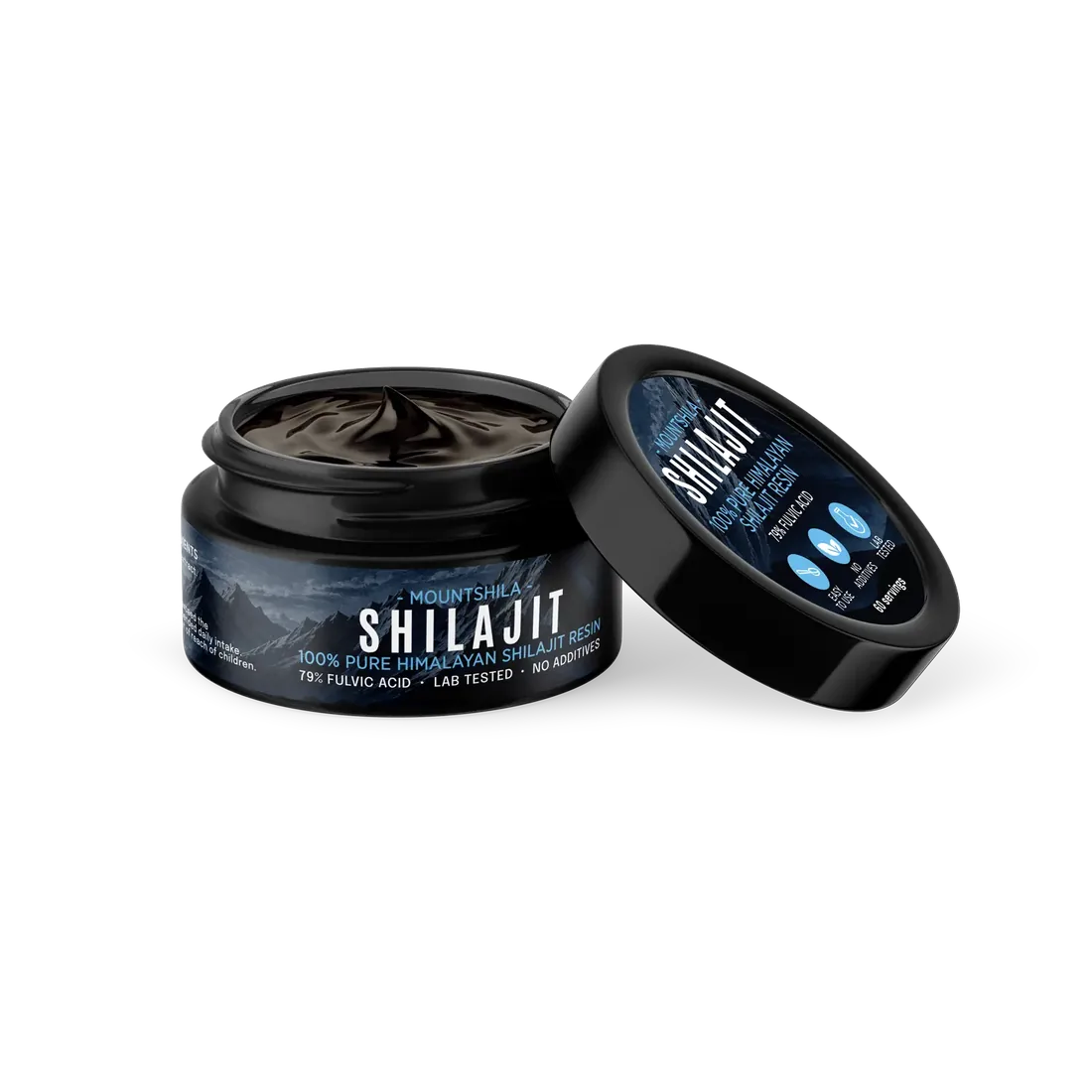


Shilajit resin behaves differently from most supplements: its texture actually responds to temperature and humidity, which confuses people who expect it to stay exactly the same in the jar year-round. Here is what is normal, what to actually do about it, and how long it realistically lasts.
Why the texture changes
Purified shilajit resin is naturally sensitive to temperature. It softens and becomes more sticky or liquid-like in warmth, and firms up, sometimes to a harder, more solid texture, in cooler conditions. This is a normal physical property of the resin, not a sign of spoilage or a manufacturing problem. If your jar seems too hard to scoop in winter or too soft and sticky in summer, that is texture responding to temperature, not the product going bad.
How to store it
Keep the jar tightly sealed between uses, at room temperature, out of direct sunlight and away from heat sources like a stove, radiator, or a car interior in summer. A cool, dry cupboard is a good default. Refrigeration is not necessary and can make the resin significantly harder to scoop, though it will not damage it. Always use a clean, dry utensil to portion it out - introducing moisture or contamination into the jar is the more realistic way to actually shorten its usable life, not ordinary room-temperature storage.
Does shilajit expire
Purified shilajit resin, properly sealed and kept away from moisture contamination, is a naturally stable, mineral-dense substance with a long practical shelf life. Check the best-before or expiration date printed on your specific jar, since this reflects our own product testing and packaging rather than a single universal number for the category. Once opened, use a clean utensil every time and keep it sealed between uses to get the full stated shelf life.
Signs something is actually wrong
Texture change alone (harder in cold, softer in warmth) is normal, as covered above. What is not normal, and worth contacting us about, is visible mold, an off or rancid smell distinct from shilajit's normal earthy, mineral scent, or contamination you can see, such as debris that was not there when you opened the jar. If you notice any of that, stop using it and reach out to support@mountshila.com.
Normal wear, not a defect
Temperature-driven texture change is normal and expected, not a defect. Sealed storage, a clean utensil, and keeping it out of direct heat are the only real requirements for getting the full shelf life out of your jar.
Sources and further reading: