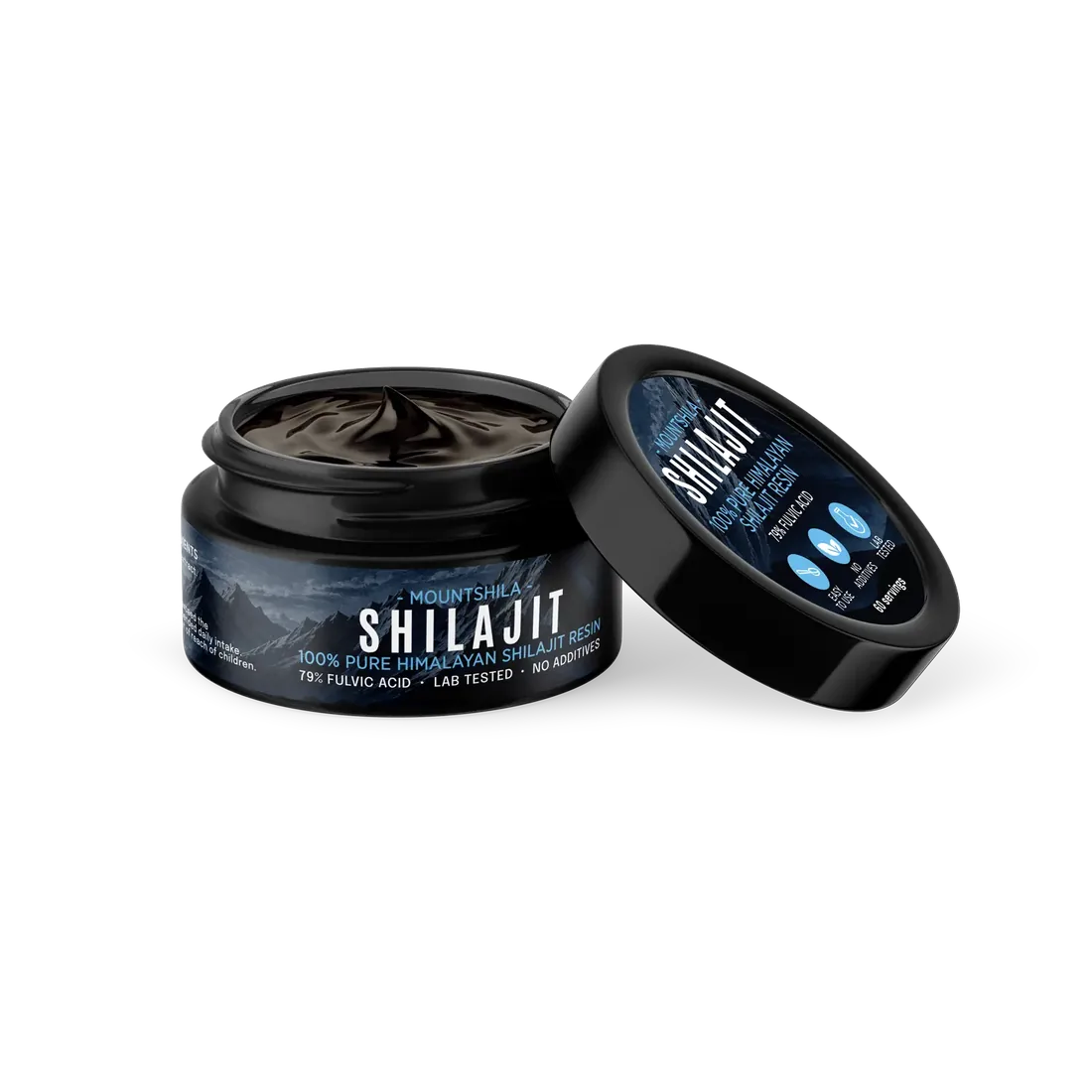


Shilajit shows up in a lot of hair-growth and anti-aging skin content, usually applied topically or taken as a supplement with promises about collagen, hair follicles and youthful skin. Here is what is actually behind those claims.
Hair growth
Hair growth, thickness, hair loss
UnknownDirect answer: we are not aware of a human trial testing oral or topical shilajit for hair growth or hair loss.
Shilajit contains trace minerals, and minerals like zinc are genuinely relevant to hair biology in the general nutrition literature. But "contains minerals relevant to hair health" is a much weaker claim than "shilajit grows hair," and we are not aware of research that closes that gap for shilajit specifically. Marketing that shows before-and-after hair photos next to a shilajit product is not the same thing as a controlled study.
Skin and anti-aging
Skin appearance, anti-aging, collagen
UnknownDirect answer: we are not aware of a human trial testing shilajit, oral or topical, on skin appearance or aging markers.
Fulvic acid's antioxidant chemistry, which we cover on our fulvic acid page, is sometimes used to imply a skin benefit, since oxidative stress is one factor discussed in skin-aging research generally. That is a plausible-sounding mechanism, not a demonstrated outcome, and those are different things. We are not going to present the first as if it were the second.
Why we are not selling shilajit as a skincare ingredient
MountShila's shilajit is formulated and tested as an oral resin supplement, not a topical skincare product, and this page is not a recommendation to apply it to skin or hair. If you see it marketed that way elsewhere, that is a separate product category with its own, largely untested, claims. We would rather say plainly that skin and hair benefits are not an area with real evidence behind them than invent a mechanism to fill the gap.
Not backed by current evidence
If skin or hair is your main reason for considering shilajit, the current evidence does not support that expectation. See our evidence-graded benefits overview for where the actual, better-supported reasons to use it are.
Sources and further reading: